AI quality control that never sleeps.
100% inline inspection at production speed. 99.8% defect detection accuracy, zero sampling bias and a real-time decision on every part.
Or call +39 049 825 6850

Every decision logged
- detection accuracy
- 99.8%
- detection accuracy
- defect rate reduction
- −65%
- defect rate reduction
- production coverage
- 100%
- production coverage
- ROI payback
- 8-12 wk
- ROI payback
Every unit inspected. Every defect captured. Every decision documented.
AI quality control replaces manual inspection with computer vision that runs 24/7, never misses a defect and logs 100% of the data.
The problems with manual inspection
Manual- Inconsistent Manual inspection accuracy varies between 60% and 85%, depending on operator fatigue, training and attention.
- Slow 30 to 120 seconds per unit for a manual check, against milliseconds for AI.
- Expensive 2 to 4 full-time inspectors per line: €120k to €200k a year in labour.
- Blind spots Sampling inspections miss 15% to 40% of defects, which then ship to customers.
- No data Manual decisions are logged hours later, if at all. No visibility into root causes.
Why AI quality control works
AIAI vision systems do not get tired, distracted or subjective. They inspect on objective criteria: dimensional tolerances, surface defects, presence or absence of components, colour consistency and contamination. Every unit, every time.
- Speed Milliseconds per unit, against 30 to 120 seconds manually.
- Accuracy 99.8% detection rate, with no sampling bias.
- Cost €2,800 a month automated, against €8k to €15k a month in labour.
- Data 100% traceability, with root cause analysis built in.
A real production line, inspected in milliseconds.
Watch AI vision inspect products at production speed and catch defects in milliseconds.
- Every unit checked inline, no sampling
- Decision per part, with its image logged
- Runs 24/7 at line speed
 AI quality control in action: real production line
 Capture, analyse, decide, act, log. In milliseconds.
A simple principle: the camera captures an image, the AI analyses it, a decision is made, an action is triggered and the data is logged.
- 01
Capture
The product moves under the AI vision system. A high-speed camera captures 3 to 8 images per second.
- 02
Analyse
An AI model trained on your product specifications evaluates each image against your tolerance criteria.
- 03
Decide
In milliseconds the AI assigns one of three outcomes to every part.
- Pass
- Rework
- Reject
- 04
Act
The decision triggers the downstream action: pass to the next station, divert to the rework line or eject to the reject bin.
- 05
Log
Image, decision, timestamp and confidence score are captured for 100% of parts and sent to your MES/ERP.
Pass means a good part, rework means fixable, reject means scrap.
Six kinds of checks, one system.
Each check is trained on your parts, with your own good and defective examples.
-
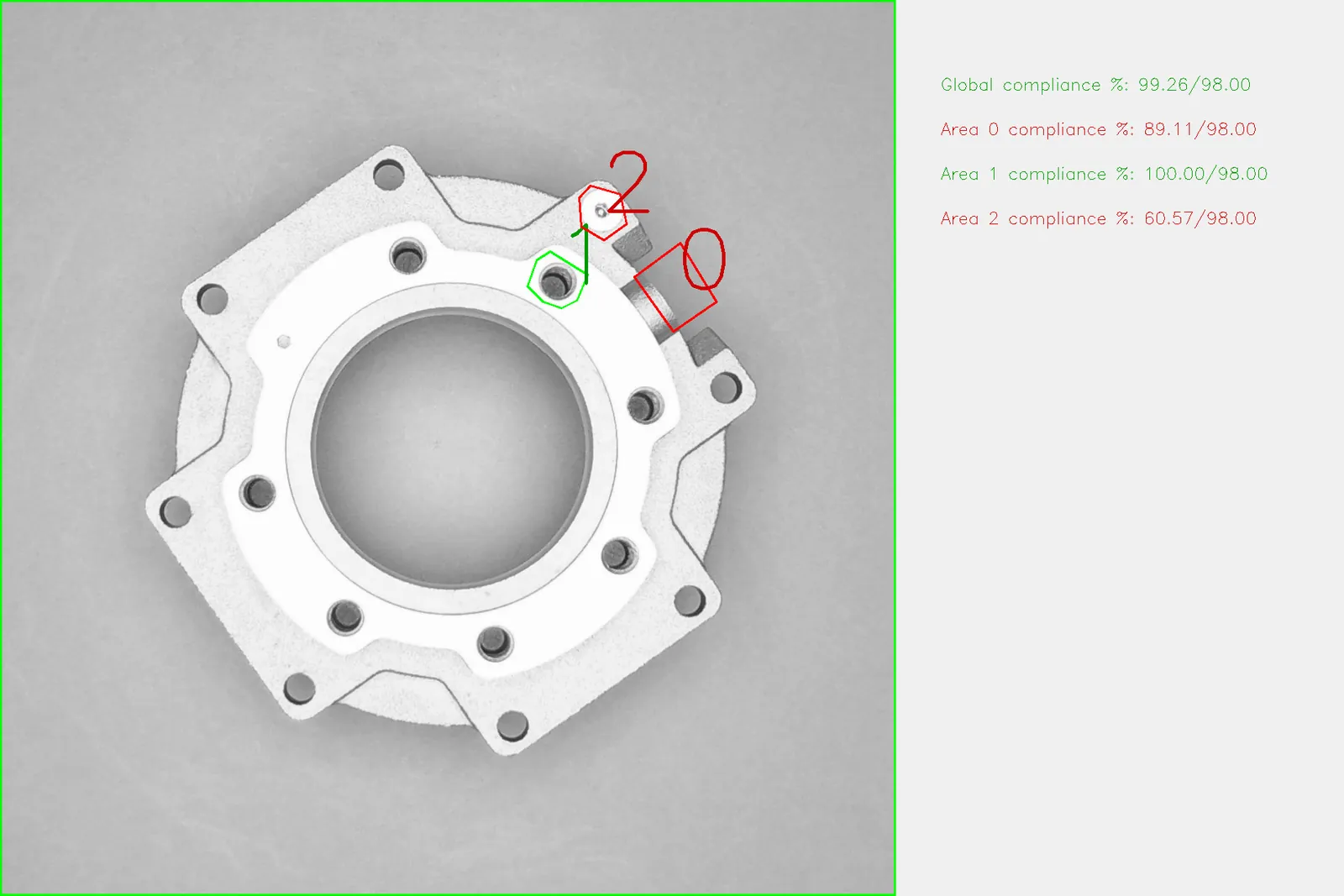
Surface defects
Scratches, cracks, dents, corrosion, paint runs and contamination, detected at sub-millimetre resolution.
See the application -
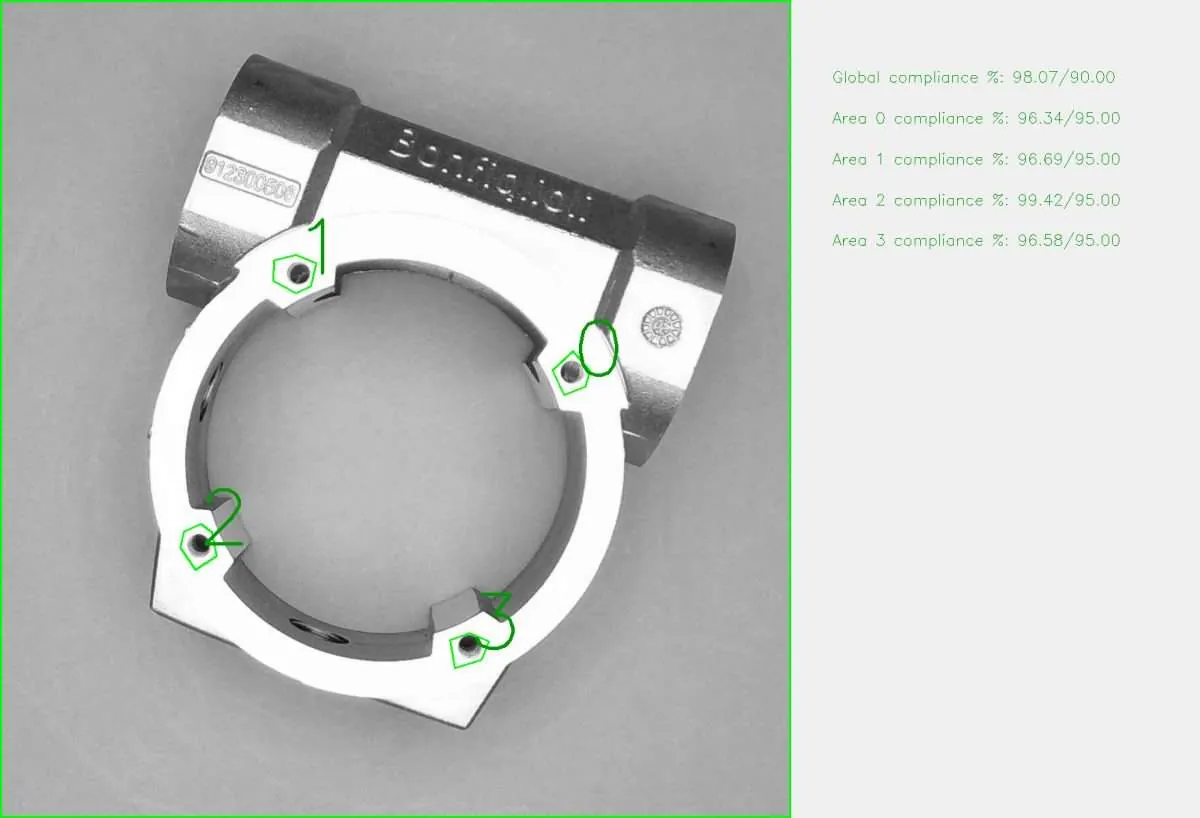
Dimensional accuracy
Length, width, height, diameter and hole position to ±0.05 mm. Automated measurement, faster than manual callipers.
See the application -

Component presence
Is the label applied? Are all fasteners present? Did the solder paste deposit correctly? Verified automatically.
See the application -
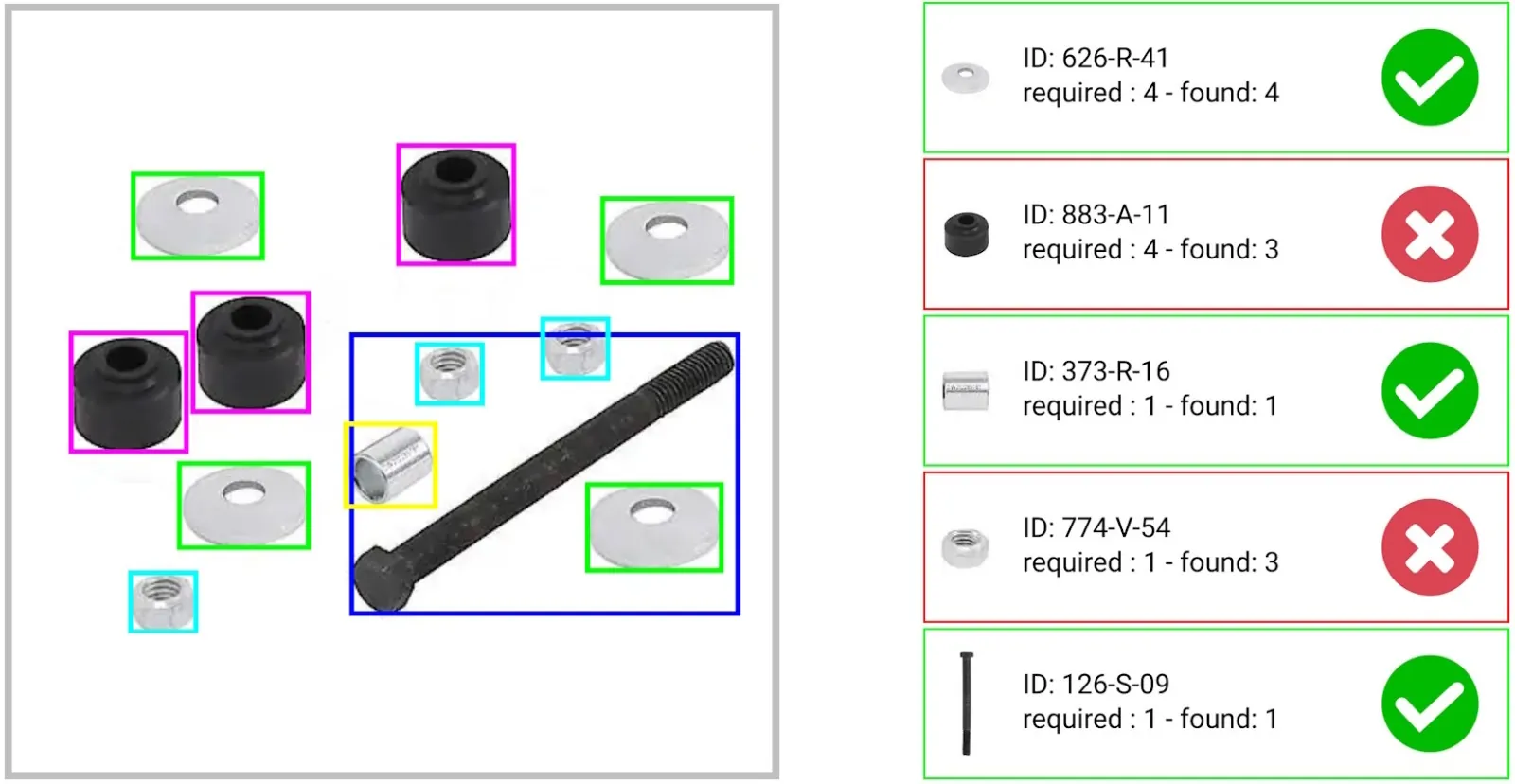
Assembly sequence
Validates placement order, orientation and alignment, and catches assembly errors before the next station.
See the application -
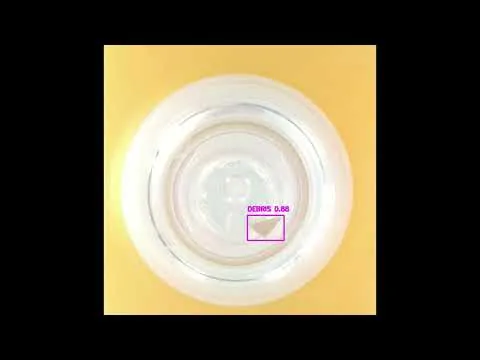
Foreign objects
Hair, particles, dust and metal shavings. Critical for food, pharma and electronics, with a 99.8% detection rate.
See the application -
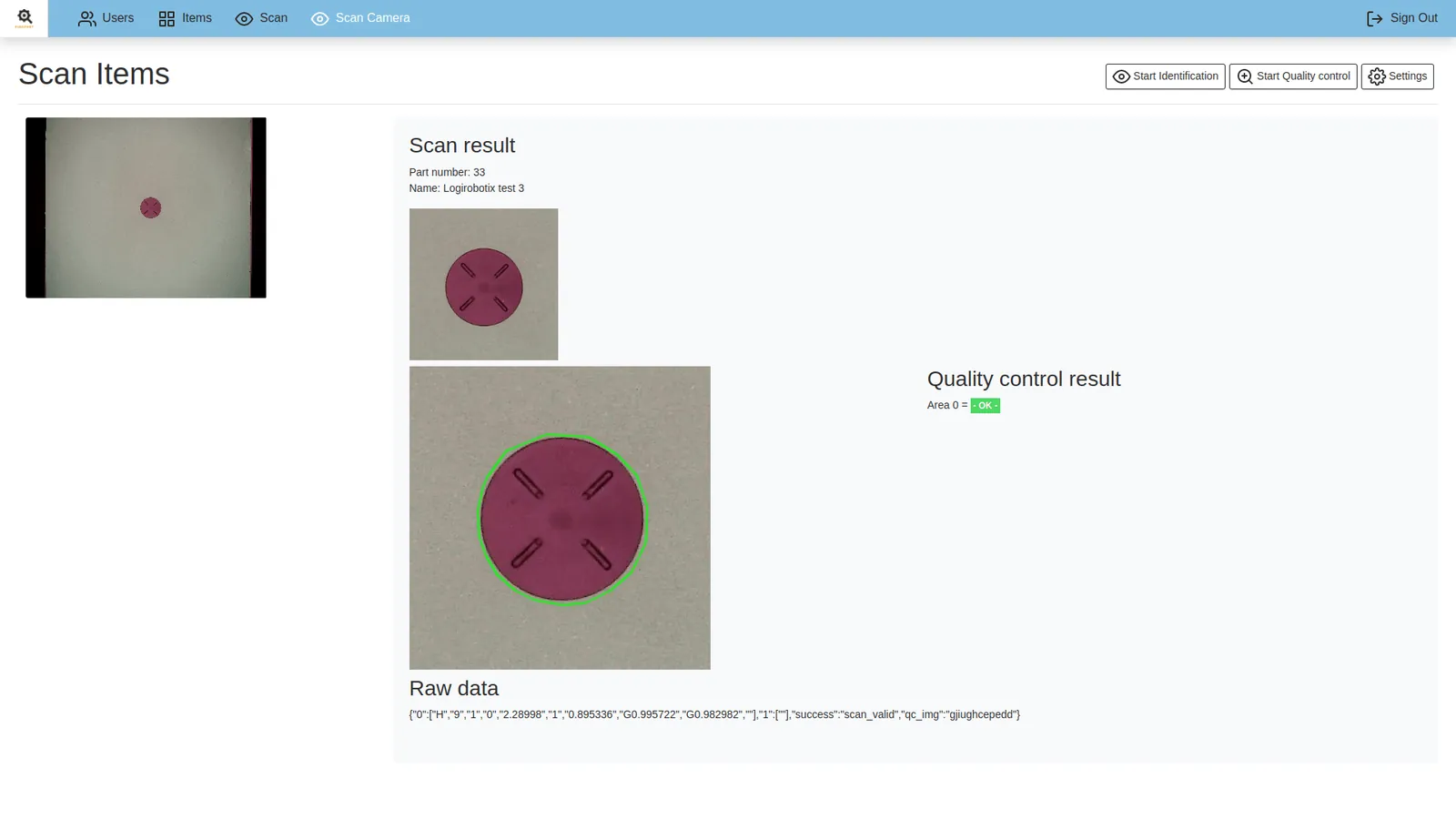
Colour and appearance
Correct colour, finish, gloss level and material surface. Subjective quality made objective with AI.
See the application
How AI detects defects: computer vision explained.
A technical walkthrough of how AI vision systems identify surface defects, dimensional errors and anomalies.
How AI detects defects: computer vision explained Positive ROI in 8 to 12 weeks.
What most manufacturers see after deployment, line by line against manual inspection.
| Metric | Manual inspection | AI quality control | Annual impact |
|---|---|---|---|
| Inspection speed | 30-120 s per unit | Milliseconds | +€80k to €150k throughput |
| Detection accuracy | 70-85% | 99.8% | −€100k to €250k rework |
| Labour cost | €120k-200k a year | €0 (automated) | −€120k to €200k savings |
| Data logging | Manual, gaps, delays | 100% automated, real time | Better decisions |
| Monthly software cost | n/a | €2,800 | −€33.6k a year |
- Total annual benefit
- €300k to €600k
- Payback period
- 8-12 weeks
- ROI
- 300-600%
PIQAPART Assembly: zero-error kit assembly, powered by computer vision.
AI computer vision guides operators step by step through kit assembly. Real-time visual feedback, no room for human error and instant operator training.
 Zero-error kit assembly with PIQAPART Assembly
 Manual kit assembly error rate of 3% to 5%: wrong parts picked, missing components, incorrect quantities, wrong sequence. New operators need 2 to 4 weeks of training, and paper manuals and static instructions create inconsistency.
PIQAPART Assembly on the workstations. Computer vision guides every step and the operator sees live feedback on screen. The system validates each part placement, blocks the process if a component is missing or misplaced, and only releases OK when the assembly is right.
- Real-time visual feedback. The operator sees exactly what the AI sees, on screen.
- Live validation. Components are recognised and validated as they are placed.
- Zero ambiguity. No paper manuals needed. An intuitive interface removes the guessing.
- Instant training. New operators are productive in hours, not weeks.
- Process blocking. Missing part? Wrong sequence? The system stops until it is corrected.
Results
- Assembly defect rate
- 0.1%
- from 3-5% · −98%
- Operator training time
- 2-4 h
- from 2-4 weeks
- Rework costs
- −90%
- cut by 90%
- Kit accuracy
- 99.9%
- every kit ships right
- Labour cost per unit
- −25-30%
- fewer errors, faster assembly
Fewer errors and faster assembly bring the labour cost per unit down, and operators work guided, confident and supported. See the AI Copilot for Assembly
From assessment to full rollout in four weeks.
No long vendor lock-in contracts. No expensive infrastructure overhaul. Start with a proof of concept on your actual parts.
- Week 1
Assessment
We audit your production line, defect patterns and quality criteria, and build a detailed ROI model showing where AI inspection delivers the most value.
- Weeks 2-3
POC deployment
AI vision goes onto your production line and runs real-time quality control on actual parts. You see results in your own environment immediately.
- Week 4+
Full rollout
Expand to the remaining lines. Integrate with MES/ERP. Connect to predictive maintenance. Go live across the facility.
 Deploying AI quality control: 4-week implementation
 Works with your current equipment.
No equipment replacement. Vision cameras install above or beside your existing line, and integration runs through standard sensors and actuators. You keep your current equipment and add AI decision-making on top. The ROI happens at the software layer, not in CAPEX.
The video shows how we integrate AI inspection into existing production lines without disrupting operations.
Ready to deploy AI quality control?
Book a free quality control assessment. We analyse your current defect patterns and show you the exact ROI for your facility.
- parts or photos
- 20
- parts or photos
- days to results
- 5-7
- days to results
- no commitment
- €0
- no commitment
AI quality control, in detail.
- Solution
Detect Surface Defects
AI finds scratches, dents, discoloration, and impurities 100% of the time. Catch quality issues inline.
Read - Solution
Inspect Metal Components
AI-powered surface defect detection for metal parts. Eliminate visual inspection bottlenecks and catch defects inline.
Read -
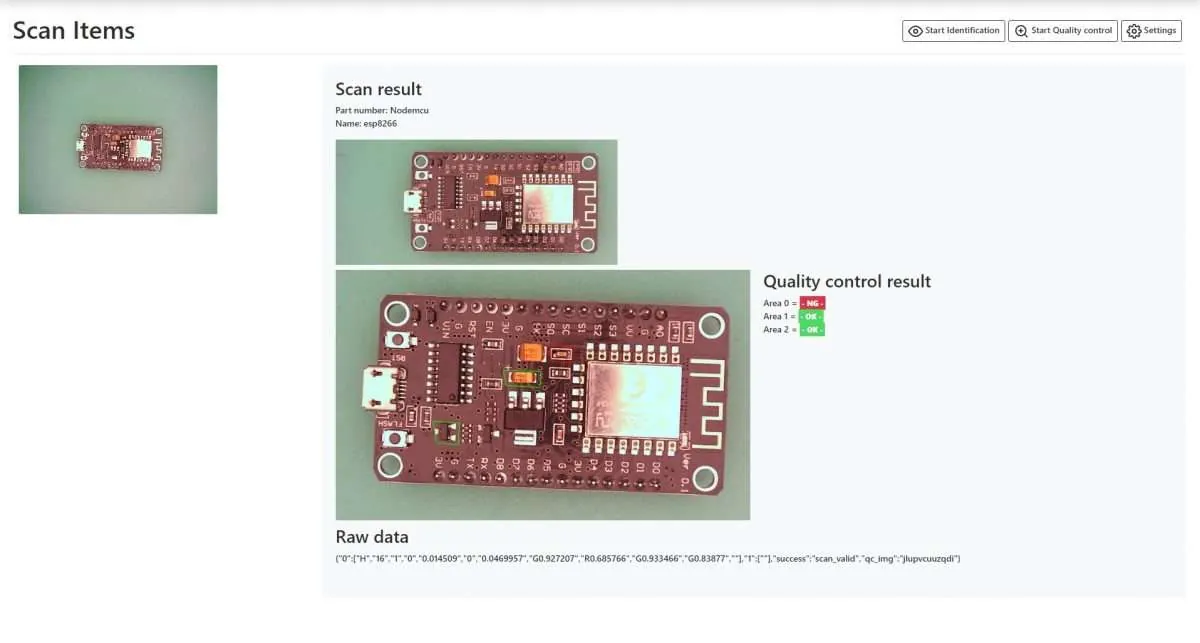 Solution
Check PCB Components
AI-powered component placement verification for electronics assembly. Catch assembly errors at 100% accuracy.
Read -
 Solution
Inspect Pharmaceutical Vials
AI-powered vial inspection detects cracks, particles, fill-level anomalies, and contamination at production speed — ensuring GMP compliance.
Read -
 Solution
Count Products Automatically
AI-powered piece counting for high-speed lines. Eliminate manual tally errors and labour.
Read -
 Solution
Automated Weld Seam Inspection
Detect porosity, cracks, lack of penetration in real-time. Zero defective welds reach customers. Setup 2-3 days, ROI 3-4 months, AWS D1.1 compliant.
Read
Machine vision delivered for




Other solutions