· 3 min read
Connected Machines, AI & Computer Vision: Unlocking True OEE.
In Industry 4.0, the goal isn’t just automation — it’s intelligent orchestration. Connected machines, autonomous AI, and computer vision are converging to transform OEE from a passive metric into a self-optimising production system.

What is OEE — and why it matters
OEE (Overall Equipment Effectiveness) is the gold standard for measuring manufacturing productivity. It combines three dimensions into a single performance metric. But traditional OEE is reactive — it tells you what went wrong after it happened. The goal of connected, AI-driven manufacturing is to make OEE proactive: catching problems before they occur and optimising continuously without human intervention.
- 01
Availability
Actual uptime vs planned production time — unplanned downtime is the biggest OEE killer
- 02
Performance
Actual speed vs ideal cycle time — speed losses from micro-stops and slow cycles
- 03
Quality
Good parts vs total parts produced — defects and rework that consume capacity
Connected machines: the nervous system of the factory
Connected machines form the data backbone of smart manufacturing. Through IoT sensors and industrial protocols (OPC UA, MQTT), every machine on the floor becomes a source of real-time intelligence — enabling a live digital twin of the shop floor that reflects actual production conditions at every moment.
- 01
Real-time data streaming
Continuous data on production rates, energy consumption, temperature, vibration, and maintenance indicators from every connected asset.
- 02
Remote monitoring and diagnostics
Full visibility into machine health and production status from anywhere — without walking the floor or waiting for shift reports.
- 03
Digital twin of the shop floor
A live virtual replica of the production environment — enabling simulation, optimisation, and planning without stopping the line.
Autonomous AI: turning data into action
Autonomous AI systems go beyond dashboards and alerts. They don’t just report what is happening — they diagnose, decide, and act. In the context of OEE, this transforms every metric from a lagging indicator into a trigger for immediate corrective action.
Sets goals, not just rules — optimising towards outcomes rather than executing fixed instructions
Adapts to changing conditions — responding to demand shifts, machine faults, and quality deviations in real time
Diagnoses and reroutes — if machine performance drops, AI identifies the cause and reroutes tasks autonomously
Learns from outcomes — improving future decisions based on what worked and what didn’t
Computer vision: seeing what machines miss
Computer vision adds perceptual intelligence that sensors alone cannot provide. Cameras and deep learning models see the production environment in real time — detecting defects, monitoring operators, tracking material flow, and validating assembly steps. Each of these directly drives OEE improvement.
- 01
Quality catch defects early
Real-time defect detection prevents defective parts from reaching downstream processes — directly improving the Quality component of OEE.
- 02
Availability detect wear before failure
Vision systems detecting early signs of tool wear, misalignment, or machine degradation — enabling maintenance before unplanned downtime occurs.
- 03
Performance analyse bottlenecks
Motion analysis identifying slow cycles, idle time, and material flow bottlenecks — feeding directly into AI-driven process optimisation.
Real-world scenario: OEE in action
A connected CNC machine with AI vision and autonomous AI — showing how all three layers work together in a single production event:
Connected CNC machine — defect event
- A camera detects a surface defect on a machined part — flagged in under 0.5 seconds
- 1
- A camera detects a surface defect on a machined part — flagged in under 0.5 seconds
- AI halts the process, reroutes the part to inspection, and logs the anomaly with full context
- 2
- AI halts the process, reroutes the part to inspection, and logs the anomaly with full context
- OEE metrics update instantly — quality, availability, and performance all recalculated in real time
- 3
- OEE metrics update instantly — quality, availability, and performance all recalculated in real time
- AI recommends a tool change based on defect pattern analysis — before the next part is damaged
- 4
- AI recommends a tool change based on defect pattern analysis — before the next part is damaged
- Cloud analytics retrain the defect detection model using the new data — the system is now more accurate than before the event
- 5
- Cloud analytics retrain the defect detection model using the new data — the system is now more accurate than before the event
The payoff: continuous, autonomous OEE optimisation
Zero-defect production — defects caught and corrected before they propagate downstream
Minimised unplanned downtime — predictive maintenance triggered by actual machine condition
Maximised throughput and yield — AI continuously optimising machine parameters in real time
Self-improving systems — models that learn from every production event and get better over time
- 01
OEE components
Availability Uptime Performance Speed Quality Defects Response time <0.5s Monitoring 24/7 Learning Continuous
- 02
Explore solutions
AI quality control Custom AI services Pricing plans Local vs Cloud for AI
Related reading
More guides on AI and smart manufacturing.
Guide · Industry 4.0
Data Science & AI: The New Engine of Manufacturing
Read more
Guide · Infrastructure
Local Server vs Cloud for Smart Factory AI
Read more
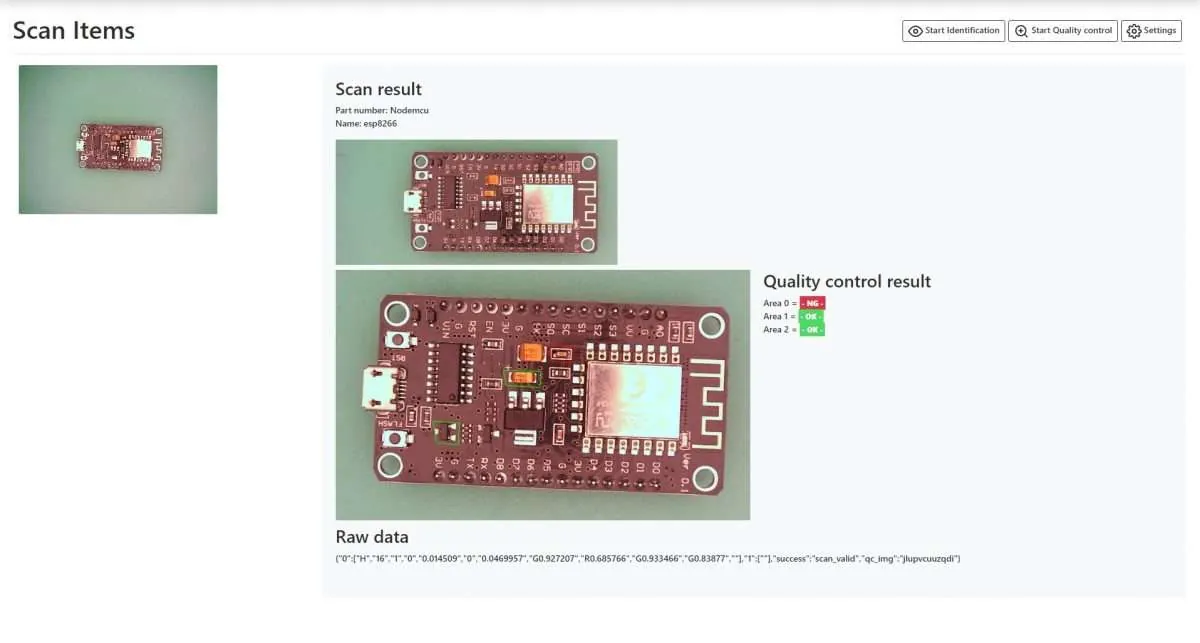
Case Study · Electronics Computer Vision for Micro Components & PCBs Read more


