Computer Vision Quality Control: The Complete Guide to AI-Powered Inspection
How automated visual inspection is transforming manufacturing — defect detection at scale, zero downtime.
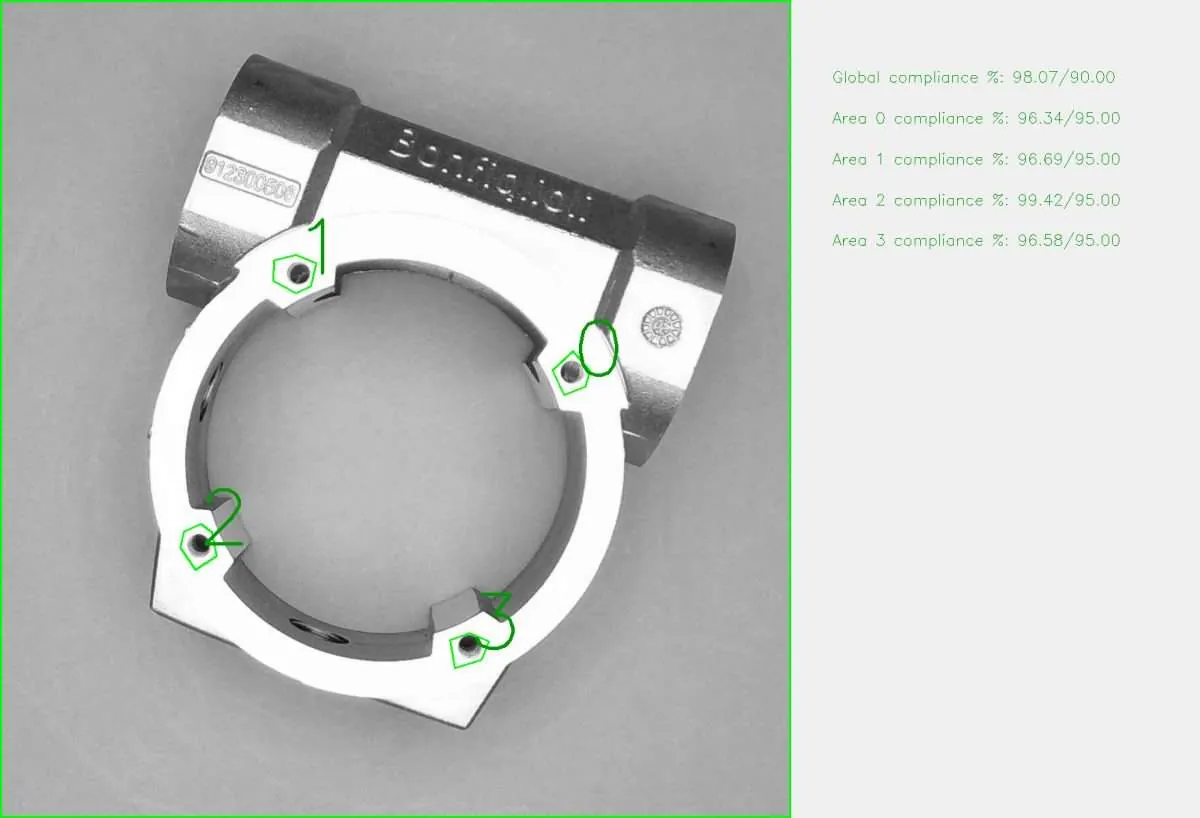

What is Computer Vision Quality Control?
Computer vision quality control is an AI-powered system that automatically inspects manufactured components using advanced image processing and machine learning. Instead of relying on human inspectors, computer vision algorithms detect defects, measure dimensions, verify colors, and validate assembly quality in real time — at production speed.
Unlike traditional automated vision systems, modern computer vision QC uses deep learning to adapt to product variations, lighting changes, and complex defect patterns — making it far more flexible and accurate than rule-based systems.
Why Manufacturers Are Switching to Computer Vision QC
- Faster inspection vs manual
- Rework costs reduced
- inline inspection — no sampling
Key Benefits of Computer Vision Quality Control
- 100% Inline Inspection — Every component inspected, zero sampling errors, true 100% coverage
- Consistent Accuracy — AI doesn’t get tired, distracted, or make judgment calls — same precision every time
- Immediate Defect Detection — Catch defects at the source, before they compound into rework or customer returns
- No Downtime Deployment — Integrate with existing production lines without disrupting manufacturing flow
- Reduced Labor Costs — Eliminate 2–3 FTE manual inspectors per line, redeploy to higher-value tasks
- Real-time Data — Track defect trends, root causes, and SPC metrics automatically
- Traceability — Every component logged with images, timestamps, and quality scores for full audit trail

How Computer Vision Quality Control Works
The process involves four key steps:
- Image Capture — High-resolution camera captures component under controlled lighting
- AI Analysis — Deep learning model processes the image in milliseconds, identifying defects, dimensions, colors, text, and surface flaws
- Real-time Decision — System passes/fails the component based on trained criteria, with confidence scores
- Action & Logging — Good parts proceed; defective parts are flagged for rework or quarantine; data logged for analytics

Applications Across Industries
Electronics & PCB Manufacturing
Detect solder joint defects, missing components, misaligned parts, and surface contaminants. Computer vision PCB inspection catches defects 90% faster than manual AOI and with fewer false positives.
Pharmaceutical & Medical Devices
Inspect rubber stoppers, vials, ampoules, and blister packs for cracks, delamination, particulates, and dimension compliance. Critical for GMP/FDA traceability.
Food & Beverage
Sort grains, detect foreign objects, verify package integrity, inspect product appearance, and validate labeling. Improve food safety and reduce waste.
Automotive & Manufacturing
Verify casting quality, detect surface flaws, measure critical dimensions, inspect welds, and validate assembly alignment. Reduce scrap rates and improve consistency.
Computer Vision vs Manual Inspection
| Metric | Manual Inspection | Computer Vision QC |
| Inspection Speed | 5–15 parts/min | 60–200 parts/min (90% faster) |
| Consistency | Varies by operator (80–90%) | 99%+ repeatable |
| Coverage | Sampling (~10%) | 100% inline |
| False Positives | Rare but costly | Configurable, data-driven |
| Labor Cost/yr | €80,000–120,000 | €1,200–5,500/mo (software only) |

Real-World Case Study
Tier-1 Automotive Supplier: 60% Defect Reduction in 2 Weeks
A contract manufacturer producing connectors for EV manufacturers deployed computer vision quality control on their primary assembly line. Results:
- Defect detection rate improved from 60% to 98%
- Rework costs dropped by 60% (€12,000/mo saved)
- Eliminated 2 FTE manual inspectors
- Zero production downtime — deployed in 24 hours
- Full traceability for customer audits
ROI: Software cost (€3,500/mo) offset by labor savings in under 3 months.
Getting Started with Computer Vision Quality Control
The best way to evaluate computer vision for your production is a free proof of concept (POC) — we bring the camera, AI, and software to your facility, test on your actual parts, and show you:
- Real defect detection rates on your components
- False positive / false negative breakdown
- Cycle time impact (if any)
- ROI timeline specific to your line
Most customers go live within 1 day of deciding to proceed. No upfront CAPEX, no long-term contracts.
Ready to Reduce Defects by 60%?
Test computer vision quality control on your production line. Free POC — no commitment, no upfront cost.
- parts or photos
- 20
- parts or photos
- days to results
- 5-7
- days to results
- no commitment
- €0
- no commitment
FAQ: Computer Vision Quality Control
Another question? Call us on +39 049 825 6850 or email info@logirobotix.com.
How accurate is computer vision inspection?
Can computer vision work with existing production lines?
What does computer vision quality control cost?
How long does deployment take?
Trusted on production lines at



Related applications
-
 Solution
AI Quality Control That Never Sleeps
100% inline inspection at production speed. Defect detection accuracy 99.8%. Zero sampling bias. Real-time decisions every millisecond.
Read -
 Solution
Automate Your Quality Control: Free Manufacturing Audit + Implementation Path
See how much AI quality control can save your factory. Book a free audit. Defect reduction, labor savings, throughput gains. From concept to production in 8–12 weeks.
Read -
 Solution
Turn your iPhone into a production-grade quality system
No industrial cameras. No complex setups. Mount any iPhone on your line, it learns your products in 10 minutes, and starts detecting defects in real-time. Full…
Read