· 3 min read
AI in Business: Where it Creates Real Value.
Artificial intelligence has moved from buzzword to strategic tool. From production to marketing, from supply chain to finance — AI is already transforming how companies operate, compete, and grow.

Why AI is now indispensable in business
In recent years, artificial intelligence has moved from a niche technology to a strategic tool for improving efficiency, precision, and competitiveness. The barriers to entry have collapsed — AI solutions are now available as monthly subscriptions, deployable in days, and accessible without in-house data science expertise.
Companies that adopt AI systematically gain measurable advantages: automated complex processes, reduced errors and waste, better demand forecasting, and entirely new data-driven business models. Those that wait hand the advantage to competitors who are already deploying.
Where AI creates value across the business
- 01
1. Production — efficiency and quality
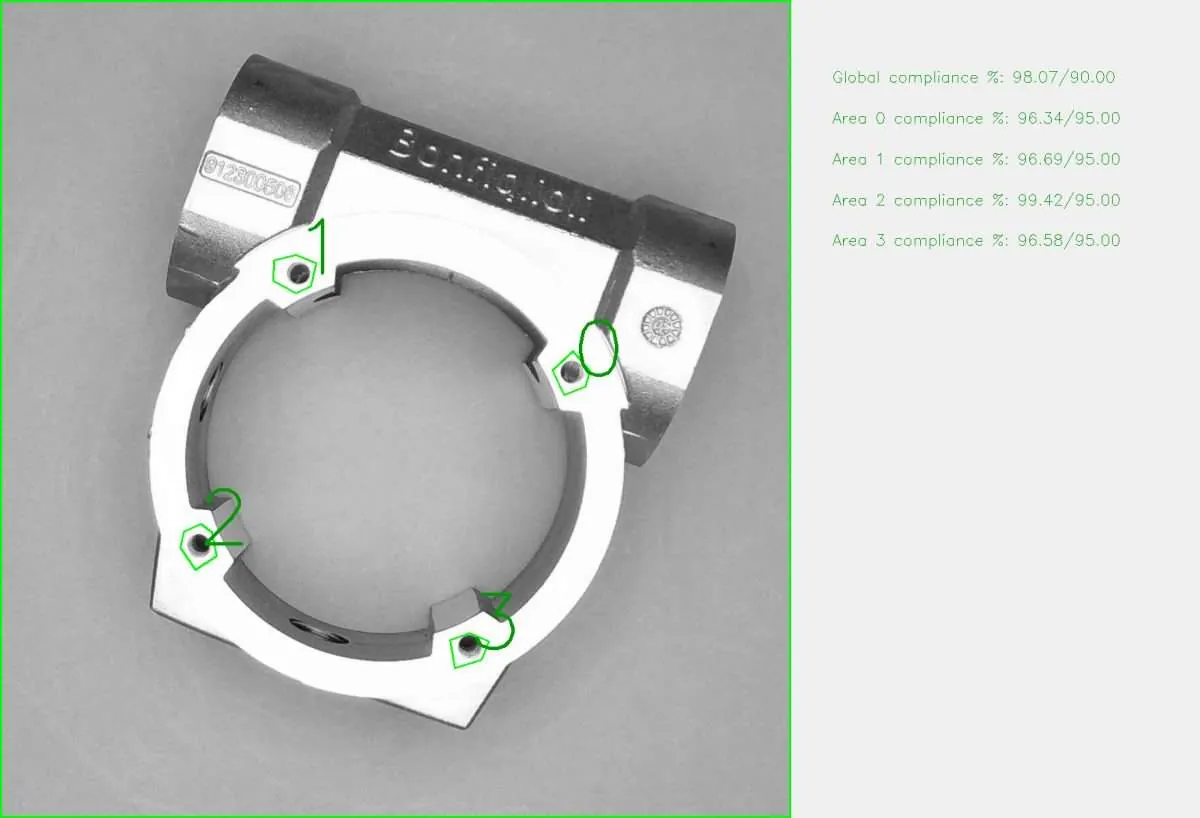
The highest-ROI application for most manufacturers Computer vision QC — real-time defect detection replacing manual inspection at production speed Predictive maintenance — IoT sensor data analysis to prevent unplanned downtime before it happens Digital twin — process simulation and optimisation without risk to live production lines
- 02
2. Marketing & Sales — personalised customer experience
Data-driven targeting and customer intelligence Predictive CRM — identify the most promising leads before your sales team calls Advanced segmentation — targeted, personalised campaigns based on behavioural data AI chatbots — 24/7 customer support with contextual, intelligent responses
- 03
3. Supply Chain — forecast to optimise
End-to-end visibility and autonomous optimisation Demand forecasting — AI models predicting order volumes weeks or months ahead Logistics optimisation — routes and loads optimised in real time for cost and speed Dynamic inventory — reducing waste and stockouts with AI-managed stock levels
- 04
4. Human Resources — talent faster
Automating recruitment and accelerating onboarding CV screening — automated candidate ranking by skills and experience fit AI onboarding — personalised onboarding assistants reducing time-to-productivity Adaptive learning — customised training paths for each employee’s role and skill gaps
- 05
5. Finance — data-driven decisions
From forecasting to real-time risk management Financial forecasting — accurate revenue and cost predictions from historical and market data Fraud detection — real-time anomaly detection on transactions before damage occurs Risk analysis — complex scenario simulation for investment and operational decisions
How to start an AI project in your company
The most common mistake is trying to transform everything at once. The most effective approach is focused and incremental — start where AI delivers rapid, measurable value, prove the ROI, then scale.
- Map your processes Identify the 2–3 processes where AI brings rapid, quantifiable value — typically where manual work is repetitive, error-prone, or creates costly downstream defects.
- 1
- Map your processes Identify the 2–3 processes where AI brings rapid, quantifiable value — typically where manual work is repetitive, error-prone, or creates costly downstream defects.
- Run a pilot project Start small — one production line, one process, one team. Measure ROI precisely. A free POC (Proof of Concept) lets you validate the technology on your actual product before committing budget.
- 2
- Run a pilot project Start small — one production line, one process, one team. Measure ROI precisely. A free POC (Proof of Concept) lets you validate the technology on your actual product before committing budget.
- Prepare the team AI adoption requires internal buy-in. Involve operators, quality managers, and production leads early — people who understand the AI as a tool that helps them, not replaces them, adopt it faster.
- 3
- Prepare the team AI adoption requires internal buy-in. Involve operators, quality managers, and production leads early — people who understand the AI as a tool that helps them, not replaces them, adopt it faster.
- Security and compliance Ensure data protection (GDPR), cybersecurity, and regulatory compliance are addressed from the start — particularly for manufacturing, pharma, and food production environments.
- 4
- Security and compliance Ensure data protection (GDPR), cybersecurity, and regulatory compliance are addressed from the start — particularly for manufacturing, pharma, and food production environments.
- Scale what works Once the pilot demonstrates ROI, scale systematically — additional lines, additional processes, additional sites. AI systems improve with more data, so scaling compounds the value.
- 5
- Scale what works Once the pilot demonstrates ROI, scale systematically — additional lines, additional processes, additional sites. AI systems improve with more data, so scaling compounds the value.
What manufacturers gain from AI adoption
Automated complex processes — freeing human resources for higher-value tasks
Reduced errors and waste — AI consistency replacing human variability
Better demand anticipation — forecasting replacing reactive decision-making
New data-driven business models — turning operational data into competitive advantage
- 01
AI in manufacturing — results
Inspection speed +90% Defect reduction −35% Rework −60% Onboarding speed +50% Typical ROI 5x Deploy time 1 day
- 02
Related guides
Smart factory guide AI & supply chain OEE & data intelligence
Related reading
More guides on AI strategy and manufacturing intelligence.
Guide · Industry 4.0 Smart Factories, AI & Computer Vision Read more
Guide · Supply Chain AI Vision & Supply Chain Automation Read more
Guide · Data Science Data Science and Manufacturing Intelligence Read more